.jpg.webp)
Traditional 50 or 60 Hz power factor testing remains a fundamental part of transformer insulation assessment. It provides an important indication of the condition under operating-frequency test conditions and continues to play a central role in routine maintenance. However, a single line-frequency measurement does not always provide enough diagnostic depth to fully assess insulation condition or support the clearest maintenance decision.
By extending testing to lower frequencies, such as 1 Hz, engineers can gain additional insight into moisture, contamination, ageing by-products, and other developing insulation problems that may be less visible at line frequency.
This does not replace established methods. It complements them by adding information that can strengthen interpretation and improve confidence in the final assessment.
Changing the test frequency does not replace established testing methods. It strengthens the information available for asset decisions.
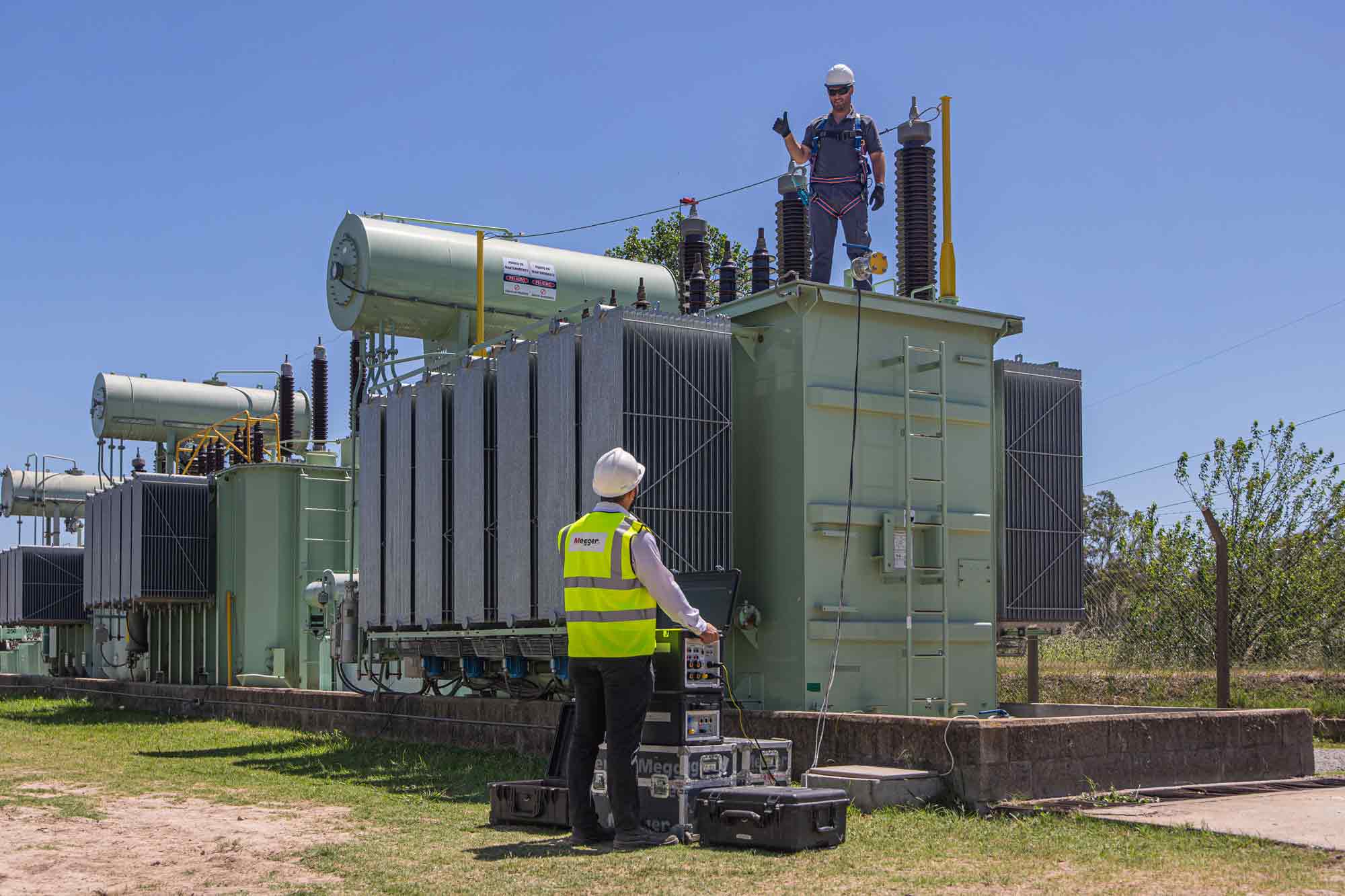
Standard power factor or tan delta tests measure dielectric losses at a single point: the operating frequency of the network. For well-developed insulation problems, this approach works well. If moisture levels are high, contamination is significant, or deterioration is already advanced, the measured losses will often rise beyond acceptable limits.
The difficulty is that insulation degradation rarely appears suddenly. It develops gradually as moisture enters the paper insulation, oil quality changes, and ageing by-products accumulate. During the earlier stages of this process, the effect on a 50 or 60 Hz measurement may still be limited.
That creates a familiar challenge for utilities managing ageing transformer fleets. An asset may still produce acceptable routine test results even though deterioration has already begun internally. In those situations, line-frequency testing remains essential, but it may not provide the full picture needed to judge insulation condition with confidence.
The value of lower-frequency testing lies in the way the dielectric response changes across the test range. When an electric field is applied to transformer insulation, several polarisation mechanisms contribute to the overall response.
Some act quickly. Others, especially those influenced by moisture, contamination, and ageing, respond more slowly.
At 50 or 60 Hz, the electric field reverses direction rapidly. Faster response mechanisms are captured clearly, but slower dielectric processes have less time to contribute fully to the measurement. As a result, early-stage degradation may have only a limited effect on the test result.
When the frequency is reduced to around 1 Hz, the field changes direction much more slowly. This gives slower dielectric processes more time to respond, making their influence more visible in the measurement as increased dielectric losses.
That is why lower-frequency testing can provide greater sensitivity to developing insulation problems. It does not create a different condition inside the transformer. It reveals more about the condition already present.
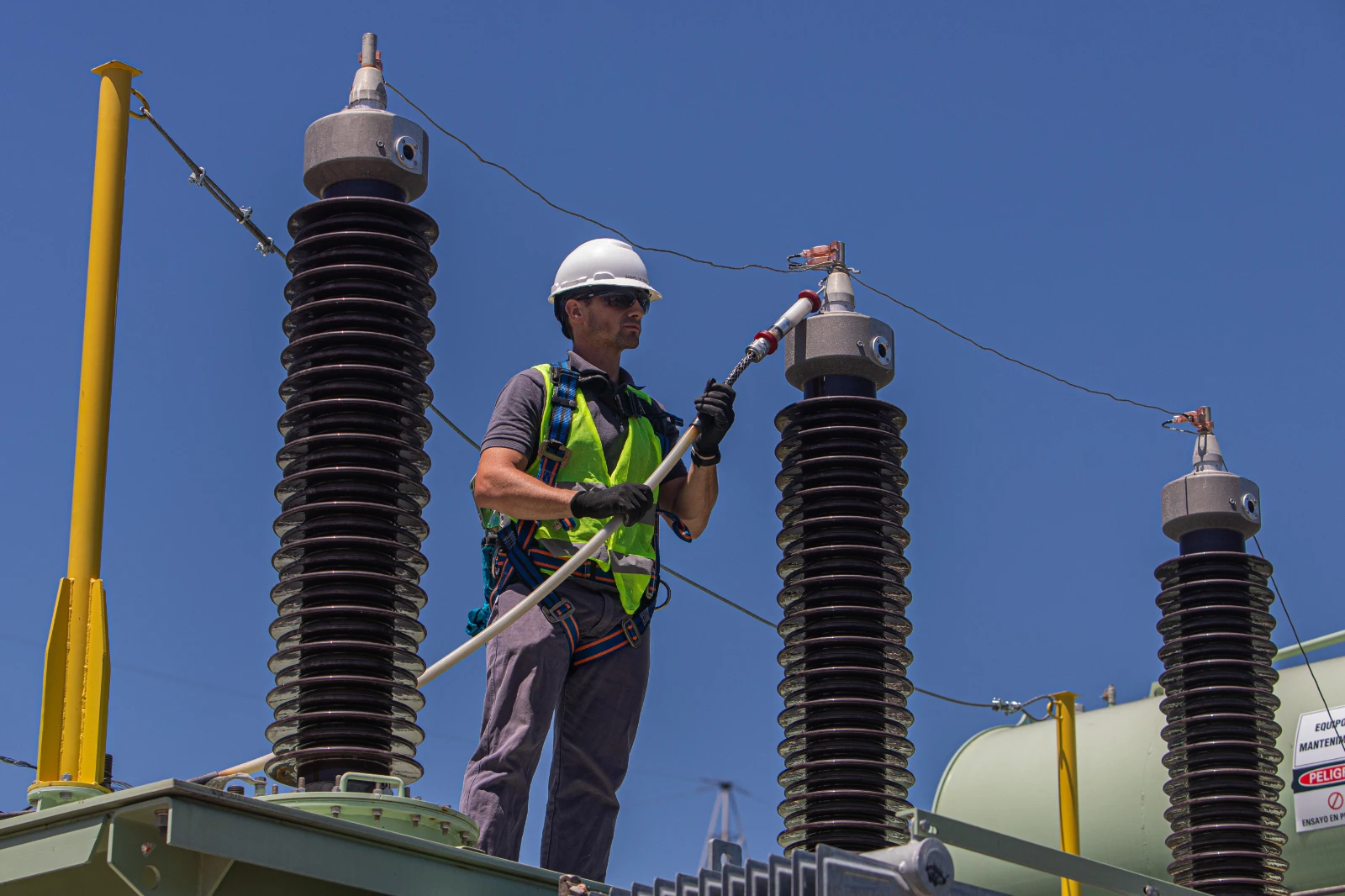
The real value is not in looking at one frequency in isolation, but in comparing results across frequencies. Your routine line-frequency result still matters. What lower-frequency testing adds is context. It helps show whether the insulation response remains stable or whether losses rise in a way that suggests developing degradation.
If insulation is in healthy condition, results are typically more stable across the test range. If dielectric losses rise more sharply at lower frequencies, this can indicate the presence of degradation mechanisms such as moisture ingress, contamination, or advanced ageing. In practical terms, this gives engineers a stronger basis for interpretation. Two transformers may appear similar when assessed only at 50 Hz, yet show materially different responses when lower-frequency measurements are included.
This additional layer of insight supports a more confident assessment of insulation condition and helps distinguish between assets that are genuinely stable and assets that require closer attention. That is the real value of the test: not forcing a different decision every time, but strengthening the evidence behind the decision you make.
For asset managers, the benefit is better-informed decision-making.
Routine insulation tests are valuable for confirming whether an asset appears acceptable at the time of testing. But when more diagnostic detail is needed, lower-frequency testing can help clarify whether an acceptable line-frequency result is genuinely reassuring or simply incomplete.
That can influence how maintenance priorities are set, where further investigation is justified, and how operational risk is assessed across the fleet. Assets with stable results across frequencies can remain in service with greater confidence. Assets showing elevated low-frequency losses can be targeted for closer evaluation before the problem develops further.
The outcome is not simply more data. It is stronger evidence for planning maintenance, justifying intervention, and reducing the likelihood of unexpected failure.
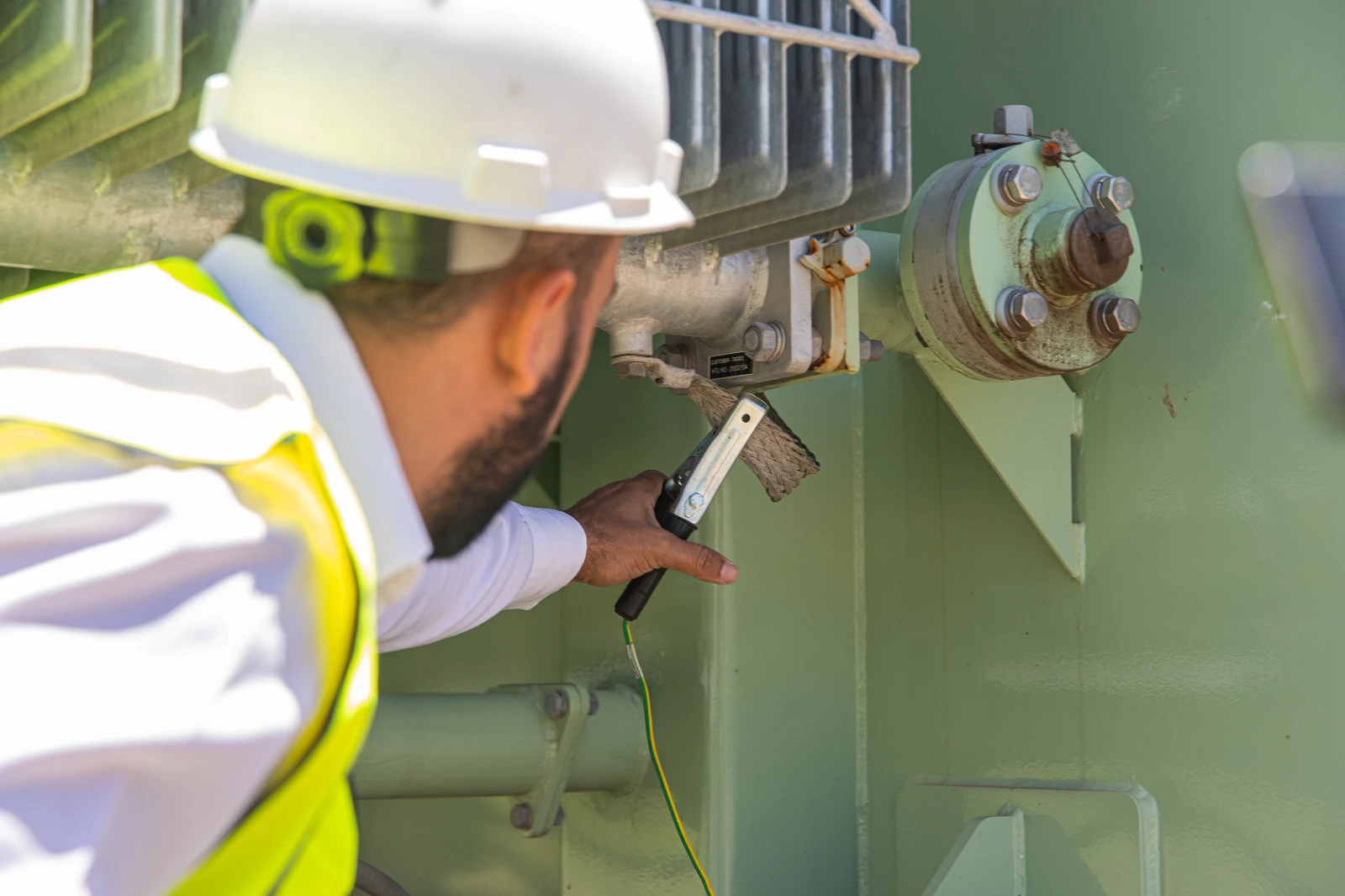
For field engineers, the priority is reliable diagnostic information without unnecessary complication. Modern transformer test systems make it possible to perform conventional insulation testing and extended frequency-based diagnostics using the same platform and a consistent workflow.
When the measurements are supported by temperature correction, guided procedures, and integrated analysis tools, the result is not only a broader diagnostic view, but also greater consistency in how results are captured and compared. That helps engineers leave site with a clearer understanding of insulation condition and stronger technical justification for the recommendations they provide.
Traditional line-frequency testing remains a fundamental part of transformer maintenance. It confirms insulation performance under standard test conditions and continues to be an essential foundation for condition assessment.
Lower-frequency diagnostics build on that foundation by providing a more sensitive view of insulation condition. They can reveal developing problems earlier, improve interpretation of borderline or unclear results, and strengthen the evidence behind maintenance decisions. That is why they matter. Not because they automatically change the outcome, but because they improve the quality of the assessment behind it.
In practice, that means better targeted intervention, fewer unnecessary replacements, and greater confidence in how transformer risk is managed over time. Changing the test frequency does not replace established testing methods. It strengthens the information available for asset decisions.
In a recent investigation involving a 230 kV transformer bushing, conventional line-frequency testing provided only part of the picture.
When insulation condition was assessed across frequencies, the results revealed a developing problem and helped distinguish it from external influences that routine testing alone could not explain clearly.