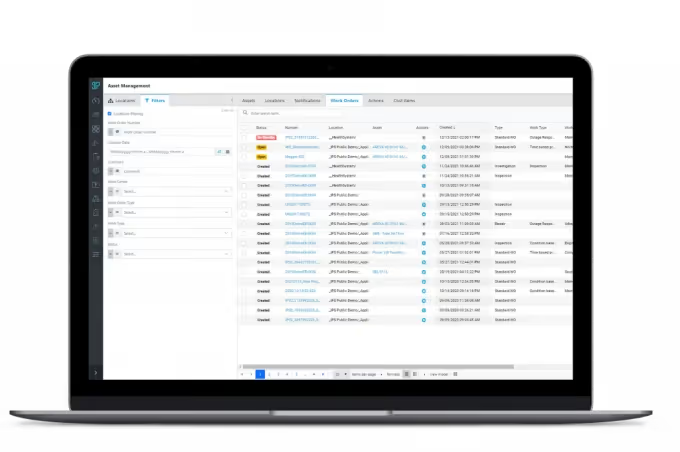

Enterprise Asset Management helps you optimise asset use, reduce downtime, and extend asset life. From acquisition and maintenance through to renewal and retirement, EAM provides a single source of truth for all asset data.
With efficient asset management systems, all historical and real-time data are always available to analyze and take appropriate actions to maximize asset lifetime and extend asset lifecycle. IPS®EAM provides necessary asset information to decrease unplanned downtime, extend asset lifetime, and move from reactive to preventive practices.
Save Resources
Proactive maintenance can reduce the costs of repairs and spare parts. Additionally, it can minimize downtime by preventing unexpected breakdowns.
Real-Time Asset Tracking
IPS®EAM supports real-time visibility into asset condition and performance, enabling users to take action when needed.
Extend Asset Lifespan
With continuous asset monitoring, our EAM system addresses asset issues proactively. Consequently, it ensures that assets are properly maintained, which can significantly extend their operational life.
Data-Driven Insights
A reliable EAM system provides broad data and analytics for informed decision-making regarding asset investment and future strategies.
Maximize asset lifetime and extend asset lifecycle
We offer a complete journey for setting up an efficient Enterprise Asset Management system, whether starting from scratch or integrating with the existing system. Our solution enhances any current EAM platform, such as SAP or IBM Maximo, by providing additional functionality and advanced data models that bridge existing gaps.
Modular design for tailored solutions
Our solutions are distinguished by their modular design, allowing customers to extend individual solutions according to specific functional requirements. This flexibility enables a gradual implementation approach, ensuring seamless integration and scalability.
With IPS®EAM, historical and real-time data are always available for analysis, helping to maximize asset lifetime, reduce unplanned downtime, and shift from reactive to preventive maintenance.